Saturday, March 3, 2012

Flydalsjuvet, Norway


 (Read this first)
Flydalsjuvet lies to the south of the little town of Geiranger, which is popular as a tourist base. It is a fabulous sightseeing point, and it is the place from where some of the best photographs of the Norwegian fjord landscape are taken. There is a lovely view over the world famous Geirangerfjord, a UNESCO World Heritage site, and of the port of Geiranger, where many cruise boats call. Its facilities have recently been modernised.
Flydalsjuvet, Norway
  Flydalsjuvet offers an impressive view and is a good photo spot for pictures of Geiranger and of Geirangerfjorden with its many cruise ships. One of the most famous motifs in Norwegian advertising was taken from this point.
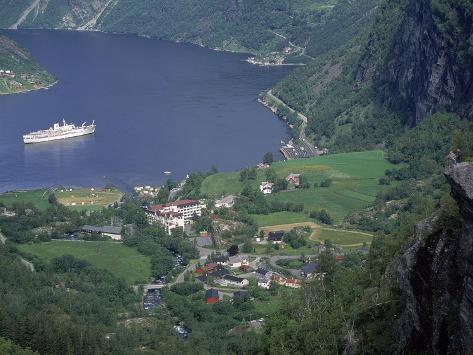
 Flydalsjuvet offers an impressive view and is an excellent point for photography, with a view over Geiranger and Geirangerfjorden with the many cruise boats. Some of Norway’s most popular travel photo images are taken here.
Flydalsjuvet, Norway
The viewpoint is divided into two areas, one upper and one lower plateau, with a gangway running in between. The viewpoint has been modernised via the project ”National Tourist Routes” and the new facilities were officially opened in a ceremony on 21st June 2006.
On the lower plateau there is also an installation called ”Fjordsetet” that was unveiled by HRH Queen Sonja in September 2003 in connection with the 10th anniversary of the regional travel company Fjord Norge AS.
  The "Fjordsetet" installation, which was unveiled by Queen Sonja in September 2003 as part of the tenth anniversary of the local Fjord Norge AS company, is located on the lower plateau.

How To Get To Flydalsjuvet
If you want to get to Flydalsjuvet you need to arrive to Geiranger, Norwegia. The Geiranger Fjord (Norwegian: Geirangerfjorden) is a fjord in the Sunnmøre region of Møre og Romsdal county in Norway. It is in the municipality of Stranda. It is a 15-kilometre (9.3 mi) long branch of the Storfjord (Great Fjord). The small village of Geiranger is located at the end of the fjord where the Geirangelva river empties into it. After arrived in Oslo international airport you cn take a bus to goto GeirangerGjord. There are express bus routes from Oslo, Trondheim and Bergen daily to Geiranger. In summer, daily buses to Åndalsnes (Nkr197, three hours) via Valldal leave Geiranger at 1pm and 6.10pm. For Molde, change buses in Åndalsnes; for Ålesund, change at Linge.
Flydalsjuvet, Norway

If you using boat, The popular, hugely recommended run between Geiranger and Hellesylt (passenger/car with driver Nkr100/210, one hour) is quite the most spectacular scheduled ferry route in Norway. It has four to eight sailings daily between May and September (every 90 minutes, June to August). Almost as scenic is the ferry that runs twice daily between Geiranger and Valldal (adult/child single Nkr160/80, return Nkr250/120, 2¼ hours) between late-June and mid-August.
From mid-April to mid-September, the Hurtigruten coastal ferry makes a detour from Ålesund to Geiranger (departs 1.30pm) on its northbound run only.
Domestic flight connections are good, with direct flights from the largest cities of Norway to Ålesund Airport Vigra and to Ørsta/Volda Airport Hovden. Direct flights to Copenhagen and Riga. Northbound and southbound coastal express Hurtigruten calls daily at Ålesund and Torvik by Fosnavåg, and during summer season you can join daily round trips between Ålesund and Geiranger. Good bus connections to/from most cities and towns in Norway. The train trip with Raumabanen is an experience in itself, from Åndalsnes the "Train Bus" takes you further on to Ålesund & Sunnmøre.
Flydalsjuvet, Norway

If you choose to get there by plane, Domestic flight connections are good, with direct flights from the largest cities of Norway to Ålesund Airport Vigra and to Ørsta/Volda Airport Hovden. Direct flights to Copenhagen and Riga. Northbound and southbound coastal express Hurtigruten calls daily at Ålesund and Torvik by Fosnavåg, and during summer season you can join daily round trips between Ålesund and Geiranger. Good bus connections to/from most cities and towns in Norway. The train trip with Raumabanen is an experience in itself, from Åndalsnes the "Train Bus" takes you further on to Ålesund & Sunnmøre.
Flydalsjuvet is easily reached close to the RV63 road, approx. 4 km from Geiranger centre, heading towards Grotli.
Flydalsjuvet is easily accessible from route 63, about 4 km from the centre of Geiranger towards Grotli. The lookout points are on two plateaux, one higher and one lower with a footpath linking the two. The lookout points have been modernised as part of the "Nasjonale turistveier" project and the new facilities were officially opened at a ceremony on 21 June 2006.

(Back to this site)

Skageflå, Norway

(Please read this first )
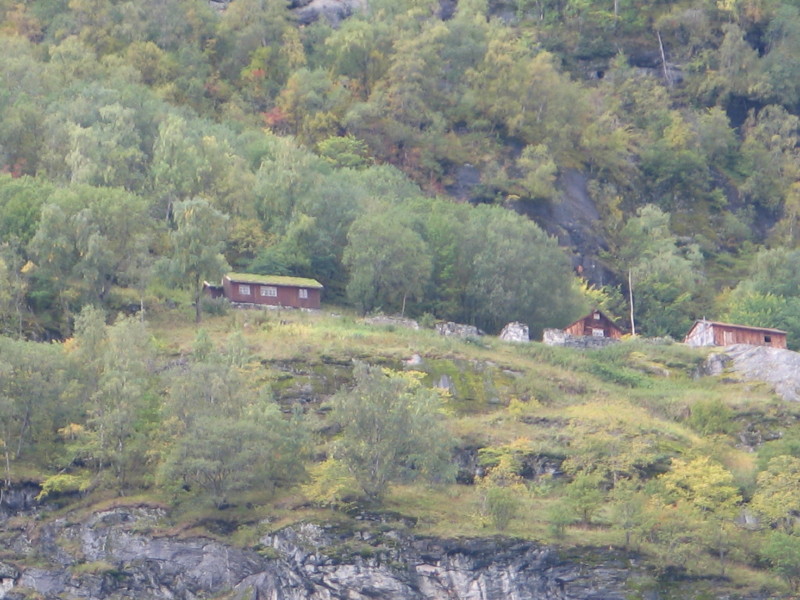
Skageflå lies on a mountain ledge 250 metres above sea level on the south side of the Geirangerfjorden. The farm has been use since the Middle Ages. In 1873 there was a massive landslide above the farm that destroyed much of the arable land. In order to make clearance easier, Skageflå was divided into two. A brother and sister from Skageflå married a sister and brother from Mollsæter, and all four then settled at Skageflå.
Skageflå, Norway
 Skageflå is an abandoned fjord farm that lies in beautiful surroundings above Geirangerfjorden. It became famous when Queen Sonja and King Harald invited more than thirty members of the royal family to lunch at the farm as part of the celebration of their Silver Wedding in 1993. You can visit Skageflå on foot (steep climb) by agreeing a drop-off and collection time with M/S "Geirangerfjord".
Skageflå, Norway

Although it was abandoned in 1916, Skageflå was once one of the richer goat farms in Geiranger, and had 2 or 3 mountain pastures for its animals. it is now a tourist attraction. A rock slide in 1873 destroyed much of the cultivated land. From the fjord, the farm has a difficult uphill hike to get to the farm The farm has traditionally been regarded as one of the richest farms in Geiranger. This is due not least to the fertile pastures in Skagedalen. At its maximum, Skageflå could provide pasture for 125 goats.
In the autumn of 1993, a large royal party, led by Queen Sonja, took the road up to Skageflå, where lunch was held for four reigning monarchs and other representatives of most of the royal families of Europe. Those who did not walk were taken there by helicopter. In 2006, Queen Sonja unveiled a World Heritage plaque at Skageflå to mark the inclusion of the Geiranger area on UNESCO's list of the world's natural and cultural heritage.
Skageflå, Norway
 Ingolf Molsæter accepted the 2008 'Godt vern' prize from Fortidsminneforeningen, (The Norwegian Society for the Protection of Ancient Monuments), Sunnmøre section, on behalf of the Skageflå Cooperative Society. Fortidsminneforeningen also gave awards to Storfjordens Venner and Atle Ringseth, the project leader, in connection with the work at Skageflå.
Skageflå, Norway

The farm was very difficult to access from Geirangerfjorden, and that is one of the main reasons why Skageflå lay abandoned at times. The road from the fjord up to the farm twists its way up the mountainside and runs over a slippery, sloping rock which is almost impossible to cross unless you have something to hold onto. In the old days, wooden poles were set out to help people get by and the story goes how once when the local sheriff was on his way up to Skageflå to collect taxes, the farmer took the poles away and the sheriff had to turn back. In 1855 the municipal council decided to grant Skageflå money to move the road away from the sloping rock or to set up railings along the most dangerous part of the route. More recently, both Skageflå and the road have been restored by an alliance of Storfjordens Venner, the landowners, the Directorate of Cultural Heritage (Riksantikvaren) and the county of Møre og Romsdal.

How To Get To Skagefla

If you want to get to Skagefla you need to arrive to Geiranger, Norwegia. The Geiranger Fjord (Norwegian: Geirangerfjorden) is a fjord in the Sunnmøre region of Møre og Romsdal county in Norway. It is in the municipality of Stranda. It is a 15-kilometre (9.3 mi) long branch of the Storfjord (Great Fjord). The small village of Geiranger is located at the end of the fjord where the Geirangelva river empties into it. After arrived in Oslo international airport you cn take a bus to goto GeirangerGjord. There are express bus routes from Oslo, Trondheim and Bergen daily to Geiranger. In summer, daily buses to Åndalsnes (Nkr197, three hours) via Valldal leave Geiranger at 1pm and 6.10pm. For Molde, change buses in Åndalsnes; for Ålesund, change at Linge.
If you using boat, The popular, hugely recommended run between Geiranger and Hellesylt (passenger/car with driver Nkr100/210, one hour) is quite the most spectacular scheduled ferry route in Norway. It has four to eight sailings daily between May and September (every 90 minutes, June to August). Almost as scenic is the ferry that runs twice daily between Geiranger and Valldal (adult/child single Nkr160/80, return Nkr250/120, 2¼ hours) between late-June and mid-August.
Skageflå, Norway

From mid-April to mid-September, the Hurtigruten coastal ferry makes a detour from Ålesund to Geiranger (departs 1.30pm) on its northbound run only.
Domestic flight connections are good, with direct flights from the largest cities of Norway to Ålesund Airport Vigra and to Ørsta/Volda Airport Hovden. Direct flights to Copenhagen and Riga. Northbound and southbound coastal express Hurtigruten calls daily at Ålesund and Torvik by Fosnavåg, and during summer season you can join daily round trips between Ålesund and Geiranger. Good bus connections to/from most cities and towns in Norway. The train trip with Raumabanen is an experience in itself, from Åndalsnes the "Train Bus" takes you further on to Ålesund & Sunnmøre.
Skageflå, Norway

If you choose to get there by plane, Domestic flight connections are good, with direct flights from the largest cities of Norway to Ålesund Airport Vigra and to Ørsta/Volda Airport Hovden. Direct flights to Copenhagen and Riga. Northbound and southbound coastal express Hurtigruten calls daily at Ålesund and Torvik by Fosnavåg, and during summer season you can join daily round trips between Ålesund and Geiranger. Good bus connections to/from most cities and towns in Norway. The train trip with Raumabanen is an experience in itself, from Åndalsnes the "Train Bus" takes you further on to Ålesund & Sunnmøre.
 Skageflå is one of a handful of farms on the slopes of the Geirangerfjord in Stranda, Møre og Romsdal county, Norway. Skageflå lies approximately 250 metres (820 ft) above the fjord. The farm is a 2 to 4 hour walk from Geiranger, and can also be reached with help of a local sightseeing boat (M/S Geirangerfjord). The boat takes passengers to a spot on the fjord just below the farm, from which point they face a very steep half-hour climb. Coastal Odyssey, a sea kayaking company, runs guided kayaking tours to the farm with interpretation. Directly across the fjord is the old Knivsflå farm and the Seven Sisters waterfall. (Back To GeirangerFjord)


Knivsfla, Norway


 (Please read this first )
Knivsflå is one of a handful of farms along the sides of Geirangerfjord in Stranda, Møre og Romsdal county, Norway. Actually it was two farms sharing the location, and they have been inhabited since at least the 1600s. There is also a mountain pasture situated some 500 metres (1,600 ft) above the fjord. It is reachable by a hardly visible footpath, starting from Knivsflå. The Knivsflå farm was abandoned in 1898 due to the danger of falling rocks. The farm is located to the north of the Seven Sisters waterfall, and directly across the fjord from the old Skageflå farm. 
Knivsfla, Norway

Knivsflå lies approximately 250 metres (820 ft) above the fjord. One can reach Knivsflå from Geiranger with help of the sight seeing boat (M/S Geirangerfjord) that will take one to a spot below the farm, the walk up then takes 30–60 minutes. Also, Coastal Odyssey, a sea kayaking company in Geiranger, runs guided kayaking trips to the farm with interpretation.
Knivsflå lies on a mountain ledge just beside De syv søstrene waterfall in Geirangerfjorden. Before it was called Knivsflå it was known as Knivsfossene. The farm lies at about the same height as the neighbouring farm of Skageflå on the other side of the fjord. Knivsflå is an old farm which was mentioned in written sources as far back as 1603. At that time Knivsflå was an abandoned farm.
Knivsfla, Norway

There are indications that the farm may have been cleared many generations earlier. In the olden days, Knivsflå was reputed to be the best farm in Geirangerfjorden. It lies in a suntrap. Spring comes early and the pastureland is excellent. At its best the farm could keep 15-18 cows and up to a hundred goats. The farm also grew corn for its own use. Even in bad years the people at Knivsflå had plenty to eat.
Knivsfla, Norway

However, accidents and premature death have affected Knivsflå to a greater extent than at other fjord and mountain farms. In the forty years from 1831 four people died on the farm - two daughters, one hired man and one servant girl. The last to die was Oline Marte, aged 15. One day she was on her way home from the summer farm and took a short cut across the river above De syv søstrene. With her milk pail in her hand she slipped and fell over the waterfall, and died.
The land around the farm is dangerous with steep drops and riverbeds, but it was the danger of a rock fall that meant that Knivsflå was abandoned as early as 1898. The municipal council in Sunnylven decided that a huge boulder balanced above the farm was so dangerous that the people living at Knivsflå had to move. The boulder is still hanging there today. Even though the people moved into Geiranger, the two farms at Knivsflå were still used for pasture up until the 1960s. Hay was dried at Knivsflå, brought down to the waterside using aerial cables and then rowed to Geiranger, where the livestock was kept. In its heyday, seven aerial cables were used to get the hay down from the summer farm.

How To Get To Knivsflå

If you want to get to Knivsflå you need to arrive to Oslo, Norwegia. The Geiranger Fjord (Norwegian: Geirangerfjorden) is a fjord in the Sunnmøre region of Møre og Romsdal county in Norway. It is in the municipality of Stranda. It is a 15-kilometre (9.3 mi) long branch of the Storfjord (Great Fjord). The small village of Geiranger is located at the end of the fjord where the Geirangelva river empties into it. After arrived in Oslo international airport you cn take a bus to goto GeirangerGjord. There are express bus routes from Oslo, Trondheim and Bergen daily to Geiranger. In summer, daily buses to Åndalsnes (Nkr197, three hours) via Valldal leave Geiranger at 1pm and 6.10pm. For Molde, change buses in Åndalsnes; for Ålesund, change at Linge.
If you using boat, The popular, hugely recommended run between Geiranger and Hellesylt (passenger/car with driver Nkr100/210, one hour) is quite the most spectacular scheduled ferry route in Norway. It has four to eight sailings daily between May and September (every 90 minutes, June to August). Almost as scenic is the ferry that runs twice daily between Geiranger and Valldal (adult/child single Nkr160/80, return Nkr250/120, 2¼ hours) between late-June and mid-August.
Knivsfla, Norway
From mid-April to mid-September, the Hurtigruten coastal ferry makes a detour from Ålesund to Geiranger (departs 1.30pm) on its northbound run only.
Domestic flight connections are good, with direct flights from the largest cities of Norway to Ålesund Airport Vigra and to Ørsta/Volda Airport Hovden. Direct flights to Copenhagen and Riga. Northbound and southbound coastal express Hurtigruten calls daily at Ålesund and Torvik by Fosnavåg, and during summer season you can join daily round trips between Ålesund and Geiranger. Good bus connections to/from most cities and towns in Norway. The train trip with Raumabanen is an experience in itself, from Åndalsnes the "Train Bus" takes you further on to Ålesund & Sunnmøre.
If you choose to get there by plane, Domestic flight connections are good, with direct flights from the largest cities of Norway to Ålesund Airport Vigra and to Ørsta/Volda Airport Hovden. Direct flights to Copenhagen and Riga. Northbound and southbound coastal express Hurtigruten calls daily at Ålesund and Torvik by Fosnavåg, and during summer season you can join daily round trips between Ålesund and Geiranger. Good bus connections to/from most cities and towns in Norway. The train trip with Raumabanen is an experience in itself, from Åndalsnes the "Train Bus" takes you further on to Ålesund & Sunnmøre.
 To get to Knivsflå from Geiranger is possible by using boat. (Back To GeirangerFjord)

Friday, March 2, 2012

Blomberg, Norway


(Please read this first )
Blomberg lies 452 metres above sea level, on a mountain plateau above Syltevik Farm on the south side of Geirangerfjorden. The farm was mentioned in written sources in 1650. In everyday speech the farm used to be called Holten. The road up to Blomberg has 28 bends, runs partly through a ravine and, even though the houses lie in the lee of the föhn winds, the road is very exposed to rock falls. During the winter, taking children to and from school in Geiranger every fortnight used to be very dangerous.
Blomberg, Norway
Blomberg has never been an easy farm to run, but the pasture there is good and when Martin Blomberg moved out in 1947, he had plenty of money in the bank. He could have bought many farms like Blomberg for that amount!
Blomberg has now been restored and the barn, which had collapsed, has been reconstructed using material from another old barn. Much of the external renovation has been done based on photographs taken by Magne Flem just after the war. This even involved standing with a photograph in one hand and cutting the boarding on the barn so that it looked just the same. It was worse at the back, as there were no good pictures showing the roof construction of the barn. In one of Magne Flem's old photographs it appears as though there was a loft on the covered bridge to the barn, but it is not very clear. However, in the Christmas issue of the cartoon series "Nils og Blåmann" from 1946, the barn at Blomberg is illustrated showing the loft, and the farm itself is so clearly drawn that it is can be assumed that the illustrator himself, Ivar Mauritz-Hansen, must have been up to Blomberg. What is certain is that both the illustrator and the author, Sigurd Winsnes, were on holiday in Geiranger with their families and got to know the Blomberg folk in the summer of 1946.
Blomberg, Norway

In any case, the barn at Blomberg now has a loft on the bridge to the barn. It took five years to restore Blomberg, and the only reason that it was possible to carry out this major project was that public funding was made available to finance it. It has cost a total of NOK 2.6 million to safeguard this historic farm for future generations.

How To Get To Blomberg
if you want to get to blomberg you need to arrive to Geiranger, Norwegia. The Geiranger Fjord (Norwegian: Geirangerfjorden) is a fjord in the Sunnmøre region of Møre og Romsdal county in Norway. It is in the municipality of Stranda. It is a 15-kilometre (9.3 mi) long branch of the Storfjord (Great Fjord). The small village of Geiranger is located at the end of the fjord where the Geirangelva river empties into it. After arrived in Oslo international airport you cn take a bus to goto GeirangerGjord. There are express bus routes from Oslo, Trondheim and Bergen daily to Geiranger. In summer, daily buses to Åndalsnes (Nkr197, three hours) via Valldal leave Geiranger at 1pm and 6.10pm. For Molde, change buses in Åndalsnes; for Ålesund, change at Linge.
If you using boat, The popular, hugely recommended run between Geiranger and Hellesylt (passenger/car with driver Nkr100/210, one hour) is quite the most spectacular scheduled ferry route in Norway. It has four to eight sailings daily between May and September (every 90 minutes, June to August). Almost as scenic is the ferry that runs twice daily between Geiranger and Valldal (adult/child single Nkr160/80, return Nkr250/120, 2¼ hours) between late-June and mid-August.
From mid-April to mid-September, the Hurtigruten coastal ferry makes a detour from Ålesund to Geiranger (departs 1.30pm) on its northbound run only.
Domestic flight connections are good, with direct flights from the largest cities of Norway to Ålesund Airport Vigra and to Ørsta/Volda Airport Hovden. Direct flights to Copenhagen and Riga. Northbound and southbound coastal express Hurtigruten calls daily at Ålesund and Torvik by Fosnavåg, and during summer season you can join daily round trips between Ålesund and Geiranger. Good bus connections to/from most cities and towns in Norway. The train trip with Raumabanen is an experience in itself, from Åndalsnes the "Train Bus" takes you further on to Ålesund & Sunnmøre.
If you choose to get there by plane, Domestic flight connections are good, with direct flights from the largest cities of Norway to Ålesund Airport Vigra and to Ørsta/Volda Airport Hovden. Direct flights to Copenhagen and Riga. Northbound and southbound coastal express Hurtigruten calls daily at Ålesund and Torvik by Fosnavåg, and during summer season you can join daily round trips between Ålesund and Geiranger. Good bus connections to/from most cities and towns in Norway. The train trip with Raumabanen is an experience in itself, from Åndalsnes the "Train Bus" takes you further on to Ålesund & Sunnmøre.
 From Geiranger you can take boat to Blomberg. (Back To GeirangerFjord)


Dalsnibba, Norway

 (Please read this first )
Welcome to Dalsnibba, a good place to see Geirangfjord. this is site you can visit we you travel to Geirangfjord.
Dalsnibba is a 1,476 meter peak just south of Geiranger. A dirt toll road has been built to a lookout point at the top where you can get a commanding view of the surrounding mountains and the fjord coming into Geiranger. This is only about 130 degrees of the 360 degree view you get from up here. 
Dalsnibba, Norway

Dalsnibba is a mountain in the municipality of Stranda in Møre og Romsdal county, Norway. It is located at the end of the Geiranger valley, about 7 kilometres (4.3 mi) south of the village of Geiranger and the Geirangerfjord. The 2-square-kilometre (0.77 sq mi) lake Djupvatnet lies directly to the southeast of the mountain.
Dalsnibba offers a very good view and is therefore a very popular tourist destination. Dalsnibba is often covered by snow even in the summer. The Norwegian national road 63 passes along the south side of the mountain, and from that road, there is a private toll road that goes up to the summit of Dalsnibba.
Dalsnibba, Norway

A dirt toll road has been built to a lookout point at the top where you can get a commanding view of the surrounding mountains and the fjord coming into Geiranger. The Geiranger – From Fjord to Summit running and cycling race begins in Geiranger and ends on top of Dalsnibba.
 Dalsnibba is one of the main attractions in Geiranger and is a very popular mountain top for visitors to the area. From the Dalsnibba plateau there is a breath-taking view across the most beautiful World Heritage Site, nestled in the surrounding mountain landscape with Geirangerfjorden right in the middle.

How To Get To Dalsnibba

If you want to get to Dalsnibba you need to arrive to Geiranger,Norwegia. The Geiranger Fjord (Norwegian: Geirangerfjorden) is a fjord in the Sunnmøre region of Møre og Romsdal county in Norway. It is in the municipality of Stranda. It is a 15-kilometre (9.3 mi) long branch of the Storfjord (Great Fjord). The small village of Geiranger is located at the end of the fjord where the Geirangelva river empties into it. After arrived in Oslo international airport you cn take a bus to goto GeirangerGjord. There are express bus routes from Oslo, Trondheim and Bergen daily to Geiranger. In summer, daily buses to Åndalsnes (Nkr197, three hours) via Valldal leave Geiranger at 1pm and 6.10pm. For Molde, change buses in Åndalsnes; for Ålesund, change at Linge.
If you using boat, The popular, hugely recommended run between Geiranger and Hellesylt (passenger/car with driver Nkr100/210, one hour) is quite the most spectacular scheduled ferry route in Norway. It has four to eight sailings daily between May and September (every 90 minutes, June to August). Almost as scenic is the ferry that runs twice daily between Geiranger and Valldal (adult/child single Nkr160/80, return Nkr250/120, 2¼ hours) between late-June and mid-August.

From mid-April to mid-September, the Hurtigruten coastal ferry makes a detour from Ålesund to Geiranger (departs 1.30pm) on its northbound run only.
Domestic flight connections are good, with direct flights from the largest cities of Norway to Ålesund Airport Vigra and to Ørsta/Volda Airport Hovden. Direct flights to Copenhagen and Riga. Northbound and southbound coastal express Hurtigruten calls daily at Ålesund and Torvik by Fosnavåg, and during summer season you can join daily round trips between Ålesund and Geiranger. Good bus connections to/from most cities and towns in Norway. The train trip with Raumabanen is an experience in itself, from Åndalsnes the "Train Bus" takes you further on to Ålesund  Sunnmøre.
Dalsnibba, Norway

If you choose to get there by plane, Domestic flight connections are good, with direct flights from the largest cities of Norway to Ålesund Airport Vigra and to Ørsta/Volda Airport Hovden. Direct flights to Copenhagen and Riga. Northbound and southbound coastal express Hurtigruten calls daily at Ålesund and Torvik by Fosnavåg, and during summer season you can join daily round trips between Ålesund and Geiranger. Good bus connections to/from most cities and towns in Norway. The train trip with Raumabanen is an experience in itself, from Åndalsnes the "Train Bus" takes you further on to Ålesund & Sunnmøre.
From Geiranger you can run your byclle and racing to the Dalsnibba. so what are you waiting for, just visit it and feel the glory of the nature here. (Back To GeirangerFjord)


The GeirangerFjord, Norway

 Welcome to the most amazing place in the world. I guarantee this is the most beautifull place that you must see. I will make “Must” in bold and underline just to make sure how much i love this place, how much i adore this spot and how much i will to do some journey and exravaganz traveling at this memorial place.
 The GeirangerFjord, Norway
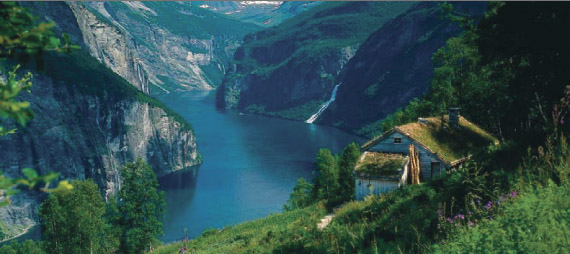
 I love to watch Naruto, and you know every time i see naruto travelling and they must ride the boat in the river, sea or lake or whatever, i always assump that may be this story happen in this beautifull place. I am talking about GeirangerFjord. The Geirangerfjord (in Norwegian: Geirangerfjorden) is one of Norway's most popular sights. The Geirangerfjord offers visitors three breathtaking waterfalls hitting the fjord on both sides of the waterway: The Seven Sisters (with seven falls), the Bridal Veil, and the Suitor. Many Scandinavian cruises include the town of Geiranger in their cruise itinerary to show the beauty of the Geirangerfjord. 
 The GeirangerFjord, Norway
Actually Geirangerfjord is the combination words between Geiranger and Fjord. Geiranger is The small village of Geiranger is located at the end of the fjord where the Geirangelva river empties into it.Geologically, a fjord  is a long, narrow inlet with steep sides or cliffs, created in a valley carved by glacial activity. A fjord is formed when a glacier cuts a U-shaped valley by abrasion of the surrounding bedrock. Glacial melting is accompanied by rebound of Earth's crust as the ice load and eroded sediment is removed (also called isostasy or glacial rebound). In some cases this rebound is faster than sea level rise. Most fjords are deeper than the adjacent sea; Sognefjord, Norway, reaches as much as 1,300 m (4,265 ft) below sea level. Fjords generally have a sill or rise at their mouth caused by the previous glacier's terminal moraine, in many cases causing extreme currents and large saltwater rapids (see skookumchuck). Saltstraumen in Norway is often described as the world's strongest tidal current. These characteristics distinguish fjords from rias (e.g. the Bay of Kotor), which are drowned valleys flooded by the rising sea.
 The GeirangerFjord, Norway
Magdalene Thoresen, Henrik Ibsen's mother-in-law, said of the area:
This fjord is surrounded by the steepest and, one is almost tempted to say, the most preposterous mountains on the entire west coast. It is very narrow and has no habitable shore area, for the precipitous heights rise in sheer and rugged strata almost straight out of the water. Foaming waterfalls plunge into the fjord from jagged peaks. There are, however, a few mountain farms here, and of these one or two have such hazardous access, by paths that wind around steep precipices, and by bridges that are fixed to the mountain with iron bolts and rings, that they bear witness in a most striking way to the remarkable powers of invention which the challenges of nature have developed in man.
 The GeirangerFjord, Norway

Unesco has categorized this the miracle of nature as one of the world heritage. The reference number is 1195. The Geirangerforjd list in the category because the justification of inscription determined by Unesco fulfilled by this place:
Criterion (viii): The West Norwegian Fjords are classic, superbly developed fjords, considered as the type locality for fjord landscapes in the world. They are comparable in scale and quality to other existing fjords on the World Heritage List and are distinguished by the climate and geological setting. The property displays a full range of the inner segments of two of the world’s longest and deepest fjords.
Criterion (vii): The Nærøyfjord and Geirangerfjord areas are considered to be among the most scenically outstanding fjord areas on the planet. Their outstanding natural beauty is derived from their narrow and steep-sided crystalline rock walls that rise up to 1400 m direct from the Norwegian Sea and extend 500 m below sea level. Along the sheer walls of the fjords are numerous waterfalls while free-flowing rivers rise up through deciduous and coniferous forest to glacial lakes, glaciers and rugged mountains. There is a great range of supporting natural phenomena, both terrestrial and marine such as submarine moraines and marine mammals. Remnants of old and now mostly abandoned transhumant farms add a cultural aspect to the dramatic natural landscape that complements and adds human interest to the area.
There are so many activities can be made while visiting this spot such as hire a boat to tarvel along the water,day trips, kayaking, rafting, fishing, bike and so many activites. If you like photograph this is the best spot to be captured, the water, the view, the environment, all the things is so very beautifull and natural and can not be compared with the others. Damn this place is very beautifull and so good.
 The GeirangerFjord, Norway

There are few attractions of nature you can enjoy, and you will never feel your investation to visit this spot is useless, is worth it bro. Those place are :
·        Dalsnibba
·        Blomberg
·        Knivsflå
·        Skageflå
·        Flydalsjuvet
·        Frieren
·        Knuten
·        The Seven Sisters
·        Storseterfossen
·        Ørnevegen/Ørnesvingen
·        Brudesløret

How To Get To GeirangerFjord

          if you want to get to GeirangerFjord you need to arrive to Oslo, Norwegia. The GeirangerFjord (Norwegian: Geirangerfjorden) is a fjord in the Sunnmøre region of Møre og Romsdal county in Norway. It is in the municipality of Stranda. It is a 15-kilometre (9.3 mi) long branch of the Storfjord (Great Fjord). The small village of Geiranger is located at the end of the fjord where the Geirangelva river empties into it. After arrived in Oslo international airport you cn take a bus to goto GeirangerGjord. There are express bus routes from Oslo, Trondheim and Bergen daily to Geiranger. In summer, daily buses to Åndalsnes (Nkr197, three hours) via Valldal leave Geiranger at 1pm and 6.10pm. For Molde, change buses in Åndalsnes; for Ålesund, change at Linge.
          If you using boat, The popular, hugely recommended run between Geiranger and Hellesylt (passenger/car with driver Nkr100/210, one hour) is quite the most spectacular scheduled ferry route in Norway. It has four to eight sailings daily between May and September (every 90 minutes, June to August). Almost as scenic is the ferry that runs twice daily between Geiranger and Valldal (adult/child single Nkr160/80, return Nkr250/120, 2¼ hours) between late-June and mid-August.
          From mid-April to mid-September, the Hurtigruten coastal ferry makes a detour from Ålesund to Geiranger (departs 1.30pm) on its northbound run only.
              Domestic flight connections are good, with direct flights from the largest cities of Norway to Ålesund Airport Vigra and to Ørsta/Volda Airport Hovden. Direct flights to Copenhagen and Riga. Northbound and southbound coastal express Hurtigruten calls daily at Ålesund and Torvik by Fosnavåg, and during summer season you can join daily round trips between Ålesund and Geiranger. Good bus connections to/from most cities and towns in Norway. The train trip with Raumabanen is an experience in itself, from Åndalsnes the "Train Bus" takes you further on to Ålesund & Sunnmøre.
 The GeirangerFjord, Norway
             If you choose to get there by plane, Domestic flight connections are good, with direct flights from the largest cities of Norway to Ålesund Airport Vigra and to Ørsta/Volda Airport Hovden. Direct flights to Copenhagen and Riga. Northbound and southbound coastal express Hurtigruten calls daily at Ålesund and Torvik by Fosnavåg, and during summer season you can join daily round trips between Ålesund and Geiranger. Good bus connections to/from most cities and towns in Norway. The train trip with Raumabanen is an experience in itself, from Åndalsnes the "Train Bus" takes you further on to Ålesund & Sunnmøre.

So, enjoy your trip bro, hopefully you will find inspiration and great story there

 
Design by Wordpress Theme | Bloggerized by Free Blogger Templates | free samples without surveys